The Hubzoid blog
Useful answers. Short reads.
Understand one idea in a few minutes, then put it to work with your team.
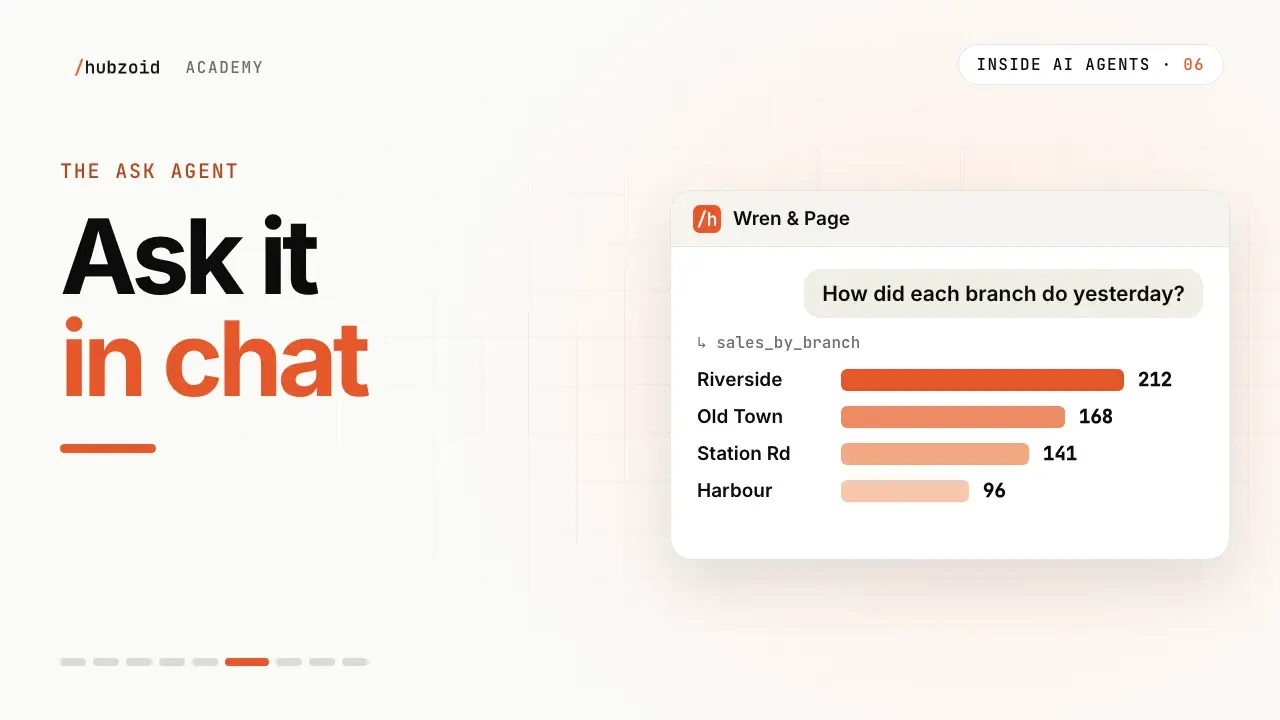
How to share an AI agent with your team
Move a useful personal agent into a shared Hub with maintained context, individual access and someone responsible when it fails.
Sim vs Hubzoid: where each fits
Comparing Sim AI alternatives? See how Sim's visual builder and Hubzoid's file-based Hub differ on license, self-hosting, approvals, Slack, access and cost.
Vercel eve vs Hubzoid: where each fits
Is Vercel eve open source, and is there a Python option? Compare eve and Hubzoid on language, license, hosting, approvals and Slack, plus other alternatives.
Mastra vs Hubzoid: where each fits
Looking for a Mastra alternative, including in Python? Compare Mastra and Hubzoid on language, license, approvals, Slack and hosting, plus other options.
Hermes vs Hubzoid: where each fits
Hermes Agent is a personal agent that remembers how you work. Compare it with Hubzoid for team use: shared knowledge, per-person access, approvals and hosting.
AI agent or workflow? Put rules in code and judgment in the model
Use code for calculations, thresholds and permissions. Use the model for interpretation and explanation. Most useful workflows combine both.
Three types of AI agents, and when to use each
A specific task, an open question or recurring work: choose the shape of the job before choosing how to run your AI agent.
Agno vs Hubzoid: where each fits
Comparing Agno alternatives? See how Agno and Hubzoid differ on who maintains the agent, approvals, Slack, traces and cost, and which other tools to consider.
How to choose your first internal AI agent
Choose one repeatable job, name its reader and define a useful output before connecting systems. A small brief keeps the first agent focused.
AI agent security: why a prompt is not a permission
A system prompt explains the job. Sensitive tools need access checks outside the model, scoped capabilities and records of what was allowed.
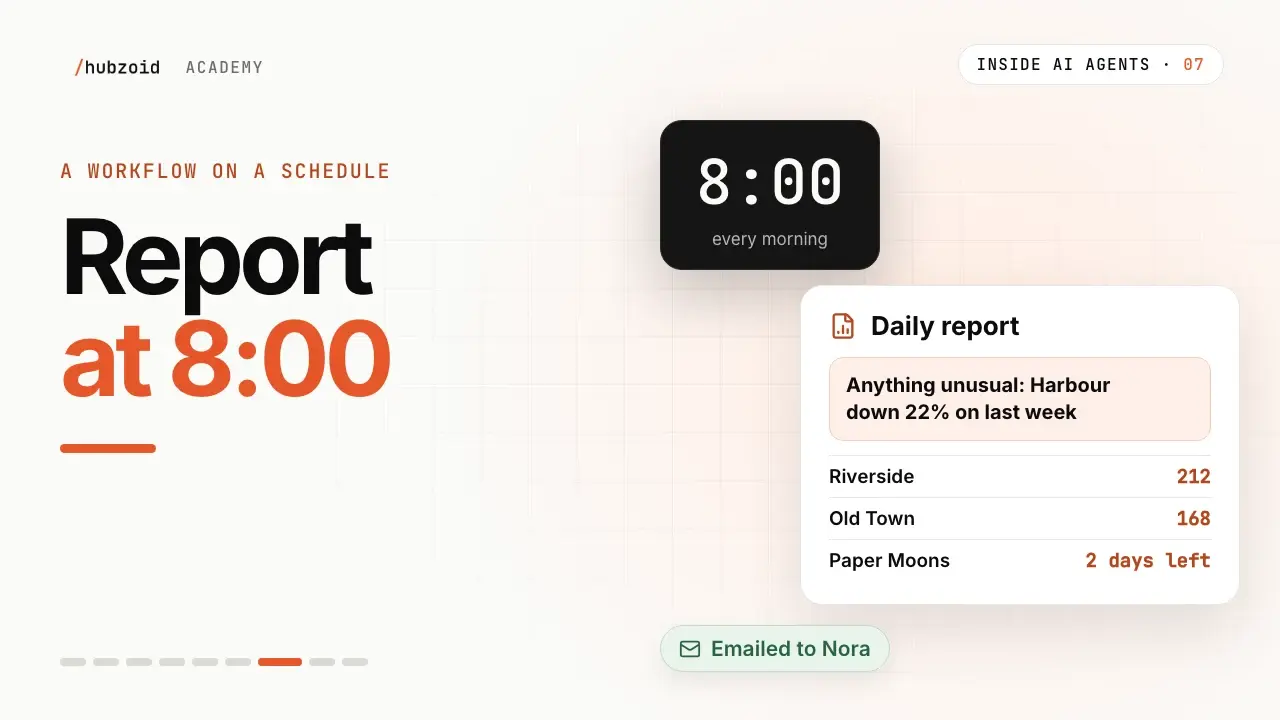
How to turn a weekly report into an AI workflow
Get the answer right in chat, write the definitions once, then schedule the work with a named account, run history and a clear failure plan.
AI agents for jewellery operations: three useful starting points
Daily briefings, stock reconciliation and supplier-slip checks can help a jewellery back office. Keep matching, valuation and approvals under exact controls.
Internal AI agents: five practical use cases
Start with reports, checks and questions your team already handles. Five internal agent jobs, the person who reviews each and how to judge the result.
Stackslop: when AI makes overengineering cheap
AI lowers the effort of building software. Every service still needs an owner. Four questions help you choose a system small enough to keep.
Should you build your own AI agent harness?
The model loop is only part of the work. Compare building and adopting on access, recovery, interfaces and years of maintenance.
Is Hubzoid open source? What you can own and run
Hubzoid is Apache 2.0 open source, including Settings and team access controls. Understand the code, deployment and operating responsibilities.
What is a company brain for AI agents?
A company brain is maintained shared context. Learn what belongs in a Hub, what stays in source systems and how it differs from chat memory.
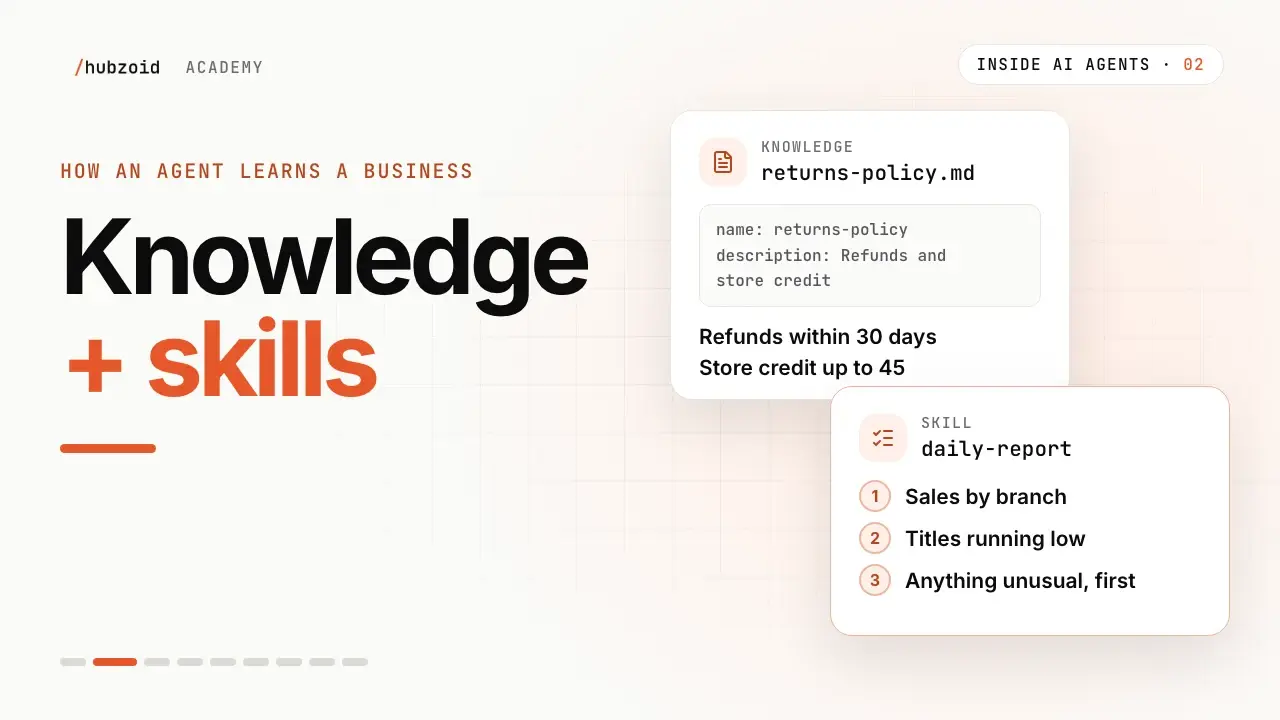
Why your AI agent needs business context
A better model still needs your definitions, procedures, decisions, owners and dates. Here is the handover that makes an agent useful.
What does an internal AI agent really cost?
Count model usage, hosting, integration, review, failures and context upkeep. A simple example shows why the token bill is only part of the total.
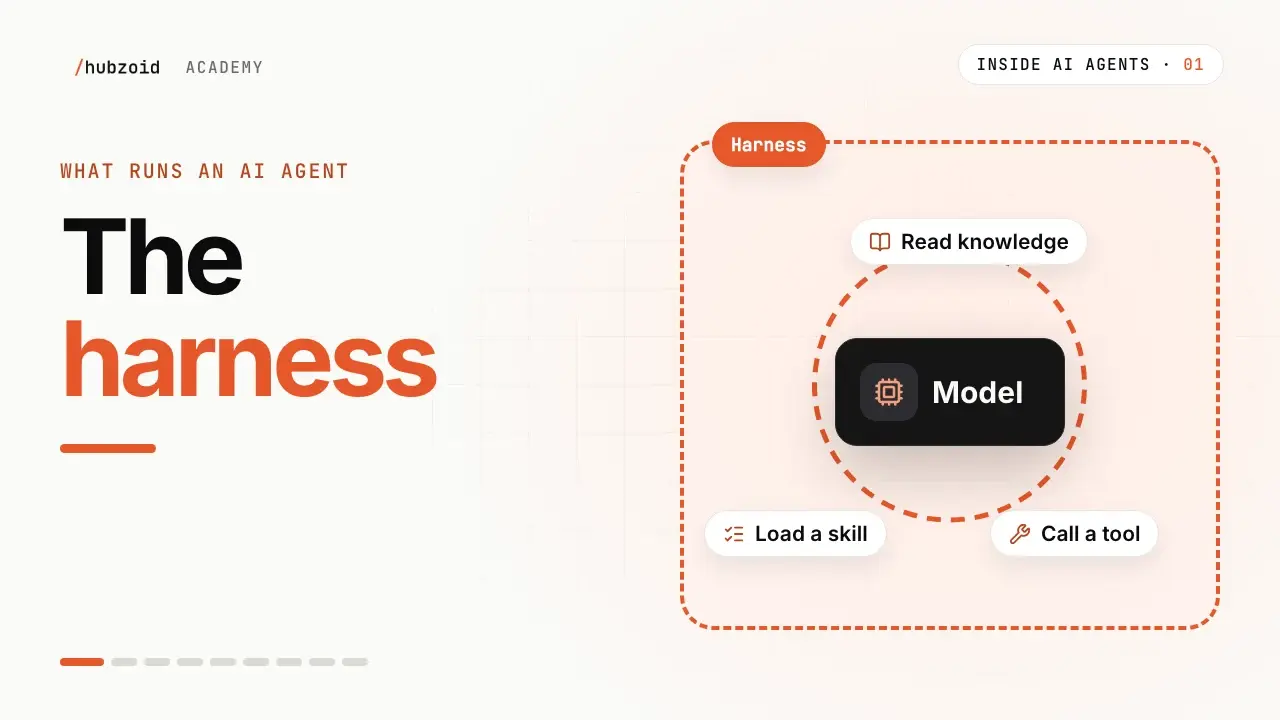
What is an AI agent harness? How Hubzoid works
The model requests work. The harness runs the loop around it. See how Hubzoid connects instructions, knowledge, tools and team access.
Try it yourself
Put an idea from these notes to work.
Every Hub starts from the open-source repository. We can also build the first agent with you.